Second Grade
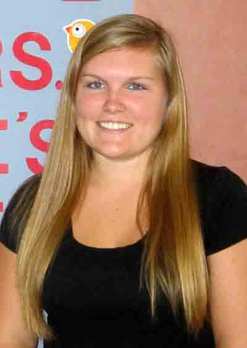
TEACHER: Stacie Steel
EMAIL: ssteel@Trinityjanesville.com
Religion
The Concordia Publishing House One in Christ curriculum is used to teach the faith to second graders. There are nine units (books) in this course. At the end of each unit, the students take home their books to keep. The Bible stories in each unit are connected by a common theme. All stories are presented to survey God’s story of love and salvation for His people as found in the Old and New Testaments and continuing on to touch our lives today. Through a planned memory program, students learn scripture verses, hymns, and portions of Luther’s Small Catechism.
Reading
The Saxon Phonics & Spelling Curriculum helps the student master essential foundational skills of phonemic awareness, alphabetizing, decoding, fluency, and spelling. Grammar mechanics and spelling are integrated into this curriculum. The spelling portion helps students enhance letter and sound recognition and increase vocabulary. Saxon Phonics and Spelling is also supplemented with the reading curriculum by Harcourt and Brace called Treasury of Literature. This supplement helps the students become more efficient readers and to comprehend on a higher level. The children learn skills such as cause and effect, making inferences, using context clues, time order words, sequence, prefixes and suffixes, and main idea.
English
Shurley Method teaches sentence structure, types of speech (noun, verb, and adjective), sentence types, and sentence parts (subjects and predicates). We learn capitalization, titles, and initials, punctuation, synonyms and antonyms, prefixes and suffixes, and words with multiple meanings. Writing activities include sentences, paragraphs, stories, description, and letter writing. Other writing opportunities are presented in journal writing and the reading workbook. Students also learn may research skills (dictionary, library, parts of a book, and encyclopedias).
Daily Oral Language
DOL for grade two review and reinforces basic skills in the areas of spelling, capitalization, punctuation, grammar, and usage. In addition, the program gives students repeated opportunities to develop and to practice oral language and proofreading skills.
Handwriting
The students review the manuscript alphabet using the Zaner-Bloser Handwriting Curriculum Spelling Series. Cursive is introduced to second grade students. They learn to write manuscript with continuous strokes. That means that when it’s time to begin cursive, the transition comes naturally because they already know the flow of continuous strokes.
Math
Saxon Math begins the second grade year with a review of first grade number concepts. Addition and subtraction facts through 20 are reviewed extensively. Students learn to graph, tell time, read a thermometer, count money, write number sentences, and fractions. We identify measurements, geometric shapes, and add three or more single-digit numbers. Toward the end of the year, students are introduced to multiplication and division concepts.
Science
The Harcourt Big Book Series is our curriculum in second grade. Through the study of science, we learn more about our God – the One who made the world, redeemed it, and supports and preserves all things for the benefit of humanity. Units covered in our Big Book Series are: Homes for Living Things, A World of Living Things, Exploring Matter, Energy in Motion, Our Earth, and Weather and Space.
Social Studies
Second grade students discover and appreciate the importance of patriotism and good citizenship. The five units coved in Macmillan/McGraw-Hill second grade Social Studies are: Our Community, All bout Earth, Our Past, All About Work, and Our Government. The students learn abut important people such as George Washington, Abraham Lincoln, Harriet Tubman, and Martin Luther King, Jr.
Technology
Students access freetypinggame.net, a complete lesson-based typing tutor, to progressively learn keyboarding at their own pace. Its 30 key, hand and finger-based lessons provide standardized typing methods. They can also log on at home to practice skills. The typing tests consist of a "words per minute" assessment from the 1 to 5 minute timed typing test. Students also use the KidPix Deluxe Program to enhance their own creativity on computers.
Art
Students in second grade have the chance to use a variety of media such as pencil, crayon, paint, paper, glue, chalk, and others. Students will not only practice cutting, gluing, and drawing skills, they will also have an opportunity to express their own creativity and style through many different elements of art. Second graders develop a better understand of the formal elements of line, color, shape and texture, and will practice using many other elements expressing themselves through art.
Physical Education
In Physical Education classes, students are taught a blend of knowledge, motor skills, and fitness as well as the development of appropriate social skills through the various games and activities in class. Students become aware of the importance of a physical and healthy life-style.
Choir/Music
In second grade, the students continue to build on their music theory skills. By the end of the school year, the students will be able to name all the notes on a music scale, and identify the count value of notes and rests on a music staff. They will develop their singing voices to praise God by singing in church and chapel services.
The Concordia Publishing House One in Christ curriculum is used to teach the faith to second graders. There are nine units (books) in this course. At the end of each unit, the students take home their books to keep. The Bible stories in each unit are connected by a common theme. All stories are presented to survey God’s story of love and salvation for His people as found in the Old and New Testaments and continuing on to touch our lives today. Through a planned memory program, students learn scripture verses, hymns, and portions of Luther’s Small Catechism.
Reading
The Saxon Phonics & Spelling Curriculum helps the student master essential foundational skills of phonemic awareness, alphabetizing, decoding, fluency, and spelling. Grammar mechanics and spelling are integrated into this curriculum. The spelling portion helps students enhance letter and sound recognition and increase vocabulary. Saxon Phonics and Spelling is also supplemented with the reading curriculum by Harcourt and Brace called Treasury of Literature. This supplement helps the students become more efficient readers and to comprehend on a higher level. The children learn skills such as cause and effect, making inferences, using context clues, time order words, sequence, prefixes and suffixes, and main idea.
English
Shurley Method teaches sentence structure, types of speech (noun, verb, and adjective), sentence types, and sentence parts (subjects and predicates). We learn capitalization, titles, and initials, punctuation, synonyms and antonyms, prefixes and suffixes, and words with multiple meanings. Writing activities include sentences, paragraphs, stories, description, and letter writing. Other writing opportunities are presented in journal writing and the reading workbook. Students also learn may research skills (dictionary, library, parts of a book, and encyclopedias).
Daily Oral Language
DOL for grade two review and reinforces basic skills in the areas of spelling, capitalization, punctuation, grammar, and usage. In addition, the program gives students repeated opportunities to develop and to practice oral language and proofreading skills.
Handwriting
The students review the manuscript alphabet using the Zaner-Bloser Handwriting Curriculum Spelling Series. Cursive is introduced to second grade students. They learn to write manuscript with continuous strokes. That means that when it’s time to begin cursive, the transition comes naturally because they already know the flow of continuous strokes.
Math
Saxon Math begins the second grade year with a review of first grade number concepts. Addition and subtraction facts through 20 are reviewed extensively. Students learn to graph, tell time, read a thermometer, count money, write number sentences, and fractions. We identify measurements, geometric shapes, and add three or more single-digit numbers. Toward the end of the year, students are introduced to multiplication and division concepts.
Science
The Harcourt Big Book Series is our curriculum in second grade. Through the study of science, we learn more about our God – the One who made the world, redeemed it, and supports and preserves all things for the benefit of humanity. Units covered in our Big Book Series are: Homes for Living Things, A World of Living Things, Exploring Matter, Energy in Motion, Our Earth, and Weather and Space.
Social Studies
Second grade students discover and appreciate the importance of patriotism and good citizenship. The five units coved in Macmillan/McGraw-Hill second grade Social Studies are: Our Community, All bout Earth, Our Past, All About Work, and Our Government. The students learn abut important people such as George Washington, Abraham Lincoln, Harriet Tubman, and Martin Luther King, Jr.
Technology
Students access freetypinggame.net, a complete lesson-based typing tutor, to progressively learn keyboarding at their own pace. Its 30 key, hand and finger-based lessons provide standardized typing methods. They can also log on at home to practice skills. The typing tests consist of a "words per minute" assessment from the 1 to 5 minute timed typing test. Students also use the KidPix Deluxe Program to enhance their own creativity on computers.
Art
Students in second grade have the chance to use a variety of media such as pencil, crayon, paint, paper, glue, chalk, and others. Students will not only practice cutting, gluing, and drawing skills, they will also have an opportunity to express their own creativity and style through many different elements of art. Second graders develop a better understand of the formal elements of line, color, shape and texture, and will practice using many other elements expressing themselves through art.
Physical Education
In Physical Education classes, students are taught a blend of knowledge, motor skills, and fitness as well as the development of appropriate social skills through the various games and activities in class. Students become aware of the importance of a physical and healthy life-style.
Choir/Music
In second grade, the students continue to build on their music theory skills. By the end of the school year, the students will be able to name all the notes on a music scale, and identify the count value of notes and rests on a music staff. They will develop their singing voices to praise God by singing in church and chapel services.